
Uncategorized
Is Your Cali Pack Authentic? How to Verify in 2026
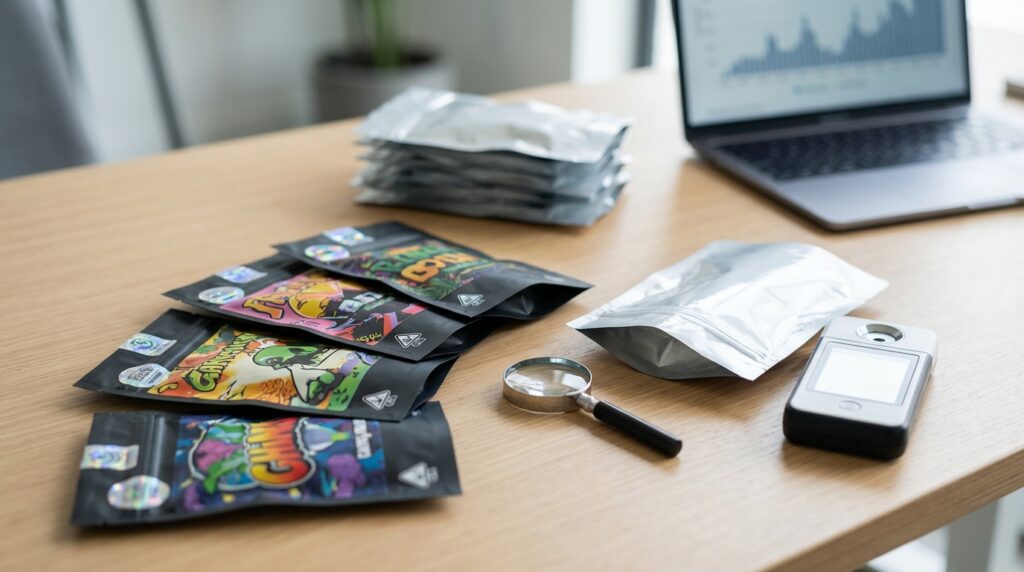
Jan
Why “Cali pack” authenticity is a mess in 2026
In January 2026 the UK is still flooded with “Cali” flower packs. Most of them are just packaging stories. The bag looks the part. The product often does not.
I see the same names in London every week. Cookies. Jungle Boys. Runtz. Backpack Boyz. The branding is familiar. That is exactly why it gets copied so aggressively. (calipackpro.co.uk)
California enforcement has already shown the scale of the packaging problem. One widely reported operation involved over 2.2 million forged packs. That number tells you everything about how easy it is to buy empty bags. (calipackpro.co.uk)
Step one is boring. Check the source before the seal
The most reliable test is still the least glamorous one. Where did it come from? If the answer is “a mate” then assume nothing.
In California a real retail product is meant to be traceable. Licensed operators use track and trace systems such as METRC. A “Cali pack” sold outside licensed retail is a warning sign. (calipackpro.co.uk)
In the UK this gets awkward fast. Recreational cannabis is not sold through a California style legal chain. So the only honest position is skepticism. Treat “authentic Cali” as a claim that needs proof.
- Telegram menus with “same day drop” language
- Corner shop counter sales with no paperwork
- Car park handovers with a sealed bag as the only evidence
- Seller refuses clear photos of labels before money changes hands
Label audit. A real pack carries real admin
Proper compliance labeling is not optional in regulated markets. California compliant products are expected to show specific warnings plus identifiers. Missing details are not a small mistake. They are the whole point. (calipackpro.co.uk)
Start with the universal cannabis symbol used in California. It is described as a triangle with a cannabis leaf plus an exclamation mark. It signals the product passed state testing plus came from a licensed business. (calipackpro.co.uk)
Then read the numbers. THC and CBD percentages. Batch identifiers. Net weight. Manufacturer details. If the pack ducks specifics then it’s not acting like regulated packaging. (gamutpackaging.com)
Legibility matters too. California labeling rules require readable text. One common reference point is 6 pt minimum sizing for key text. Micro print that looks stylish can also be a dodge. (calipackpro.co.uk)
| Check | What you want to see in 2026 | What fakes often do |
|---|---|---|
| Compliance symbol | Clear California universal symbol. Crisp edges | Soft print. Odd proportions. Missing entirely |
| Product specifics | Strain name. 3.5 g weight for a typical eighth pack. THC and CBD figures | Vague strain. No weight. Random potency claims |
| Batch level info | Batch number plus lab style detail. Feels tied to one production run | No batch. Batch looks copied across different strains |
| Tax and compliance marks | Evidence of official stamping in regulated markets | Blank space where a stamp should sit |
The print tells on itself. Look like a packaging buyer
Counterfeit packaging is often good from arm’s length. It falls apart at fingertip distance. That is why packaging firms keep saying the same thing. The devil is in the details. (gamutpackaging.com)
In 2026 premium packs use better barrier materials. Better Mylar layers help keep oxygen plus UV out. Resealable closures are meant to keep flower fresher. That quality costs money. (packsandprints.co.uk)
Fakes often miss color consistency. Matte finish looks chalky. Spot gloss looks flat. Holographic areas can look like a cheap sticker slapped on late.
- Edges of text should be sharp
- Fonts should match known brand releases
- Zip closure should feel solid. Not flimsy
- Heat seals should be straight. Not wavy
Smart packaging is normal in 2026. Use it properly
QR codes are no longer a novelty. Packs now treat them as a trust mechanic. By mid 2026 consumers expect to scan for lab reports plus harvest dates. (packsandprints.co.uk)
NFC tags are also appearing on higher end packaging. Tap to open a product page or authenticity certificate. It’s not foolproof. It’s still better than trusting artwork alone. (packsandprints.co.uk)
Be picky about what the scan returns. A dead link is a red flag. A link that jumps to a random file host is also a red flag. The clean version is a brand domain plus a COA page that matches the pack batch identifiers.
Don’t confuse “a QR code exists” with “it’s verified”. Counterfeiters can print QR graphics easily. They can also print a code that points to a fake report.
Price logic in pounds. Yes it still works
In the UK the “Cali” price band is all over the place. I still see eighths pitched at £55 in Manchester. I also see £90 in parts of London. Both can be nonsense.
Extremely cheap “premium” packs are a classic counterfeit tell. Packaging specialists call out pricing that is a fraction of the usual cost. That pricing is used to move fake branded product fast. (gamutpackaging.com)
The opposite trick also exists in the UK. Some sellers price high to make a bag feel special. Packaging alone doesn’t prove quality. (calipackpro.co.uk)
My rule for 2026 is simple. If the price is 40% under what that seller normally charges for the same tier then assume a problem. If the price is inflated purely due to branding then assume theatre.
Vapes and disposables. Where counterfeits get risky fast
Carts and disposables are harder to judge by smell plus texture. That is why counterfeiters love them. Packaging advice from the industry is blunt. It’s easier to spot knock off packaging than it is to spot fake hardware or oil. (gamutpackaging.com)
If you’re looking at a “Cali Clear” style product then treat the packaging as a starting point only. Brand guides commonly push QR based COA checks plus batch matching. This is the minimum you should do in 2026.
I also put weight on performance consistency. Harsh taste plus burnt notes are not proof of counterfeit. They’re still a reason to stop using it. Safety beats bragging rights.
- COA access should be immediate. No broken scan loop
- Batch identifiers should match device plus box
- Hardware finish should look uniform. No rattles
- Oil should not look cloudy. No floating debris
If you suspect a fake in 2026. Do the unglamorous thing
If you think the pack is counterfeit then don’t consume it. Treat it like a food product with a broken seal. The risk is not theoretical.
Take photos in good light. Get close ups of labels plus batch identifiers. Keep the outer wrap if it exists. That evidence matters if you need to challenge a seller.
Contact the brand through official channels if they publish them. Ask if the batch format matches what they use. If the seller pushes back hard then you have your answer.
In the UK you can also choose to dispose of it safely rather than pass it on. Passing on a suspected counterfeit is how the problem stays profitable.
Reading list I actually used for this piece
Calipack Pro on certification markers plus California compliance basics
Gamut Packaging on counterfeit packaging tells plus label checks
Packs & Prints on 2026 packaging trends such as QR codes plus NFC tags
Cali Clear vape store guide on spotting fakes
