
Uncategorized
Mylar Bags in Cannabis Packaging: Environmental Impact
Jan
Mylar is everywhere. That should worry you.
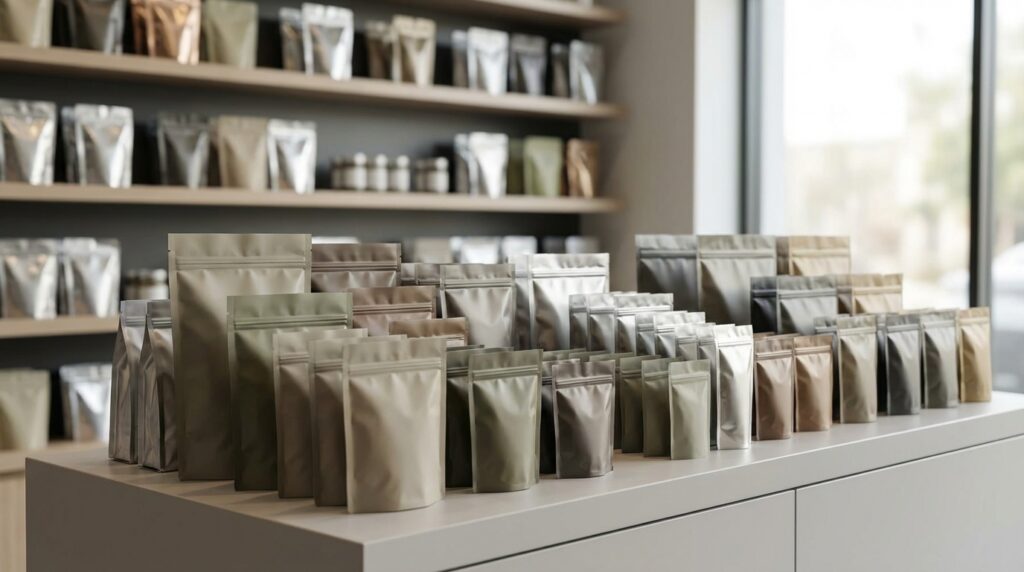
Scroll any regulated menu in 2026. The grid is a wall of stand up pouches. Most are sold as “Mylar”.
This is not just a California thing. You see the same pouch formats in UK CBD retail. Manchester Arndale kiosks do it. Bristol vape shops do it.
That packaging choice has a footprint.
I’m not anti pouch. I’m anti lazy pouch. The environmental impact lives in the material mix, the print spec, the end of life story.
Why cannabis brands keep picking Mylar
Mylar pouches win on product protection. Sellers like DC Packaging push the standard benefits. Light barrier matters. Moisture control matters. Odour containment matters.
Freshness sells in 2026. The Scribd guide on cannabis Mylar bags describes a typical shelf life of six months to one year when storage is handled well. It also calls out the common multilayer build. That is usually aluminium and plastic. See Cannabis Mylar Bags: the Ultimate Packaging Solution.
Retailers also love the ergonomics. A pouch stands upright. A pouch takes a label without drama. A pouch can be heat sealed for tamper evidence. A pouch can take a child resistant zipper.
The harsh truth is cost. In 2026 a basic custom printed cannabis pouch in the UK often lands around £0.18 to £0.45 each at volume. Glass looks premium. Glass also turns your unit economics into a slow bleed.
What the numbers look like on a shelf
Here is a simple comparison based on typical UK trade quotes in 2026. Your mileage will vary by finish level. Soft touch coatings add cost. Child resistant zips add cost.
| Format | Typical unit weight | Typical UK trade price per unit | End of life reality in the UK |
|---|---|---|---|
| Foil laminate “Mylar” pouch for 3.5 g flower | 8 g to 14 g | £0.18 to £0.45 | Rarely recycled at kerbside. Often binned or incinerated. |
| Glass jar with lid for 3.5 g flower | 90 g to 150 g | £0.55 to £1.40 | Glass is recyclable in most areas. Lids and labels complicate it. |
| Paperboard carton with inner pouch | 18 g to 35 g | £0.40 to £1.10 | Outer carton often recycled. Inner pouch still becomes waste. |
| Metal tin for pre rolls | 25 g to 60 g | £0.60 to £1.80 | Potentially recyclable. Real world capture depends on consumer behaviour. |
What a cannabis “Mylar” pouch is actually made of
Most cannabis Mylar bags are not one material. They’re a laminate. PET film sits on the outside. A metallised layer or aluminium foil sits inside. A sealant layer sits on the product side.
That structure is why they perform. DC Packaging explicitly points to an aluminium foil core for opacity. The Scribd guide also describes a multilayer design for barrier strength. The barrier stops oxygen ingress. The barrier slows terpene loss.
That structure is also why they’re awkward to recycle. Layers are bonded with adhesives. Inks and lacquers sit on top. Zippers add another polymer. Tear notches are minor. The laminate build is the problem.
Mylar gets called “recyclable” in marketing copy. You’ll see that claim floating around. Treat it as a question, not a fact. Ask what stream it goes into in the UK. Ask what proportion becomes reprocessed polymer.
End of life in the UK in 2026 looks grim for flexible plastics
England’s household recycling rate is still stuck around 44% to 45% in 2026. Defra’s Simpler Recycling update spells out the stagnation. It also sets out the household collection requirement for core materials by 31 March 2026. See Simpler Recycling in England: policy update.
Flexible plastic is the missing piece. Current UK estimates put flexible plastic packaging at more than 27% of consumer plastic packaging. Current estimates also put its recycling rate at around 7%. The University of Manchester post lays it out in plain terms. See Still trash? UK flexible plastic packaging recycling and infrastructural contraction.
Take back schemes don’t solve the story on their own. Tracker work discussed widely in 2026 suggests around 70% of some returned soft plastics still ends up incinerated. That is the dirty secret of “drop off recycling” when infrastructure is thin. The Everyday Plastic campaign has supporting context and figures. See The Hard Truth About Soft Plastic.
So when a cannabis brand says “just recycle it” in 2026, I wince. A typical foil laminate pouch is not welcome in most kerbside systems. Even where film collections exist, multilayer structures can be rejected. The consumer then bins it. The brand still counts it as a green win.
Policy pressure is turning into real money
Packaging is not just a sustainability slide deck in 2026. It’s a line item. It’s also a compliance workload. EPR is now a daily operational reality for large producers. Defra’s EPR guidance makes that clear. See EPR recycling obligations and waste disposal fees.
The base fee signals are blunt. Plastic is listed at £423 per tonne in the published base fee table. Fibre based composite is higher at £461 per tonne. This is where “fancy” laminates get expensive fast. See the same Defra guidance page for the table.
Here is the bit most brands miss. A pouch is light, so the per unit fee looks tiny. A 10 g pouch is 0.01 kg. At £423 per tonne that is roughly 0.42p per pouch before modulation. Multiply by one million units. You’re staring at about £4,230.
Plastic Packaging Tax sits alongside this. HMRC sets the recycled content bar at 30%. The GOV.UK overview lists a current charge of £223.69 per tonne for in scope plastic packaging. See Plastic Packaging Tax. Industry notices in 2026 point to a planned rate of £228.82 per tonne from 1 April 2026. See Fresh Produce Consortium.
PCR Mylar helps. It is not a free pass.
PCR is the easiest “better than nothing” move in 2026. Custom 420’s explainer describes PCR as post consumer material collected, processed then remanufactured. It also frames PCR as a route to reduced virgin feedstock. See What are Post Consumer Recycled (PCR) Mylar Bags?.
PCR comes with trade offs. Custom 420 flags quality concerns. It also points out performance can drop for long term shelf life. That matters for flower and live resin. It matters for anything terpene heavy.
In practice, PCR content becomes a spec negotiation. In 2026 many suppliers offer 30% PCR as the commercial sweet spot. Some push 50% PCR in the outer layer only. You need to ask where the recycled content sits. A token outer layer helps tax positioning. It may not shift end of life outcomes.
These are the questions I would ask before approving PCR pouches for a retail run.
- Exact PCR percentage by layer
- Food contact declarations for the product type
- Barrier test data for oxygen and moisture
- What UK recycling route is claimed
“Biodegradable Mylar” claims need a hard stare
Some vendors now pitch biodegradable or compostable pouch structures. The Scribd guide mentions compostable options using materials like PLA. 454 Bags also talks up biodegradable solutions in cannabis storage. See Why use biodegradable storage in the cannabis industry?.
The issue is the disposal route. “Compostable” rarely means home compostable in a British garden bin. It usually means industrial conditions. Those collections are patchy in the UK in 2026. If the pouch goes into general waste, the claim is theatre.
There is also a performance point. Compostable films can struggle to match foil level barrier. That pushes brands back to thicker builds. It pushes them towards additional coatings. Your green claim then rides on a complex laminate again.
I don’t hate compostables. I hate unqualified compostables. If a pack is sold as compostable, it needs a disposal instruction that a normal shopper can follow. It also needs a retailer that will back a return route.
How to reduce Mylar impact without wrecking product quality
Start with less material. In 2026 I still see eighth bags that could hold an ounce. Oversizing is common. It looks premium. It also burns material for no gain.
Next, favour simpler structures. Ask suppliers about aluminium free high barrier films. Ask about mono material pouches where possible. Some suppliers position these as store drop off recyclable in certain markets. Treat that as market specific. Ask what it means for a UK shopper.
Print choices matter more than people admit. Full flood inks raise the complexity. Metallic effects sell well. They also complicate reprocessing. If you want a premium look, use a strong brand colour. Use a clean matte varnish only if you must. Skip soft touch unless it’s doing real work.
Finally, consider reuse schemes that fit cannabis reality. A refill jar programme can work for clinics. It can also work for membership models. It’s harder for general retail. The unit has to survive compliance handling. The unit has to feel hygienic. That’s the bar.
My buying stance for 2026
If you sell cannabis or CBD in 2026, Mylar pouches are not going away this quarter. They’re too functional. They’re too cheap. They’re also too entrenched in compliance thinking.
So I would buy with intent. I would prioritise right sizing. I would push for PCR content where barrier data holds up. I would stop approving vague “recyclable” claims without a UK route.
I would also put the cost story on the table in plain pounds. Base EPR fees of £423 per tonne are not abstract. Plastic Packaging Tax above the 30% threshold is not abstract. The fee pressure will keep rising across 2026. Pretending otherwise is wishful thinking.
If you want to read the supplier arguments that keep this category moving, start with DC Packaging, Custom 420 and 454 Bags. Then sanity check the policy reality with Defra EPR guidance and HMRC Plastic Packaging Tax.
