
Uncategorized
Why Child-Resistant Cannabis Packaging is a Must: A Deep Dive
Jan
Child-resistant cannabis packaging is not a “nice to have”
In 2026, child-resistant cannabis packaging is one of the few areas where retailers should stop pretending there is a clever workaround. There’s not.
If your product can be mistaken for a sweet, a vitamin or a fizzy drink, then your packaging has to do more than look premium. It has to slow a child down.
That’s the job.
The risk is boring. That’s why it gets missed.
The most common failures are not dramatic. They’re routine. A pouch that is left open. A tin that was “good enough”. A jar lid that only needed one try.
Edibles make the problem sharper. Gummies and chocolates fit into a child’s logic far too easily. Vape cartridges can look like tech accessories. That’s not a moral panic. That’s product design reality.
From a retail point of view, the reputational hit lands faster than any fine. One local story travels. One parent post becomes a headline. The rest is damage control.
What “child-resistant” actually means in practice
Child-resistant doesn’t mean child-proof. The standard idea is delay. The packaging should stop most children for long enough to prevent casual access.
Testing frameworks tend to use timed opening attempts with a child panel. A common benchmark expects at least 85% of children to fail to open a pack in the first timed window. After a demonstration, a typical target is at least 80% still failing.
Adult usability matters too. Many protocols expect around 90% of adults to open and properly reclose the pack within a set time. The pack must be safe. The pack must stay usable.
The awkward bit that brands avoid saying
Child-resistant design punishes weak manufacturing tolerance. A cap that’s a fraction off. A slider that’s too smooth. A zipper track that’s not properly aligned.
Lab testing is one thing. Batch consistency is the real fight.
| Test element | What it checks | Typical performance target | Retail implication |
|---|---|---|---|
| Child panel first attempt window | Initial resistance without instructions | 85% unable to open | Impulse access is reduced |
| Child panel after demonstration | Resistance after seeing how it works | 80% still unable to open | Stops repeat attempts by curious children |
| Adult panel open and reclose | Accessibility for typical adults | 90% can use it correctly | Fewer customer complaints and returns |
| Reclosure integrity | Whether it stays child-resistant after use | Must remain compliant after opening cycles | Reduces “it worked once” failures |
The formats that actually hold up on shelves
There’s a lot of marketing fluff in packaging. The real world is simpler. Some formats cope with retail handling. Some don’t.
Start with the product form. Then pick the closure system. Then worry about finishes and color.
Resealable pouches
Child-resistant zippers can work well for gummies and pre-rolls. They ship flat. They display well. They also invite shortcuts on specification.
A proper child-resistant pouch is not just a “stiff zip”. Look for a certified child-resistant zipper system. Pair it with clear opening instructions. Don’t hide the instructions under a fold.
Pouch-focused suppliers often talk about this plainly. You can see that tone in trade write-ups from firms like Pouch Cannabis. You can cross-check similar guidance from Cubbi on storage habits and safe handling via their 2026 guidance.
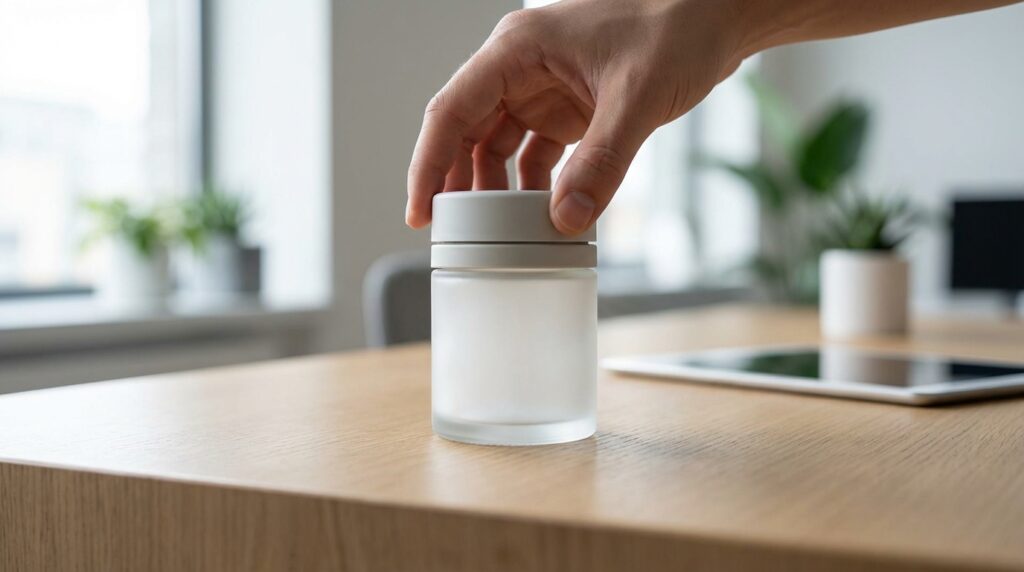
Rigid jars with push-down-and-turn caps
For flower, jars are still the premium default. Done right, they feel like apothecary. Done badly, they feel like a cheap supplement bottle.
The cap matters more than the jar. A child-resistant cap with a proven liner combination reduces odor escape. It also reduces complaints about “stale” stock.
Retailers in premium settings tend to prefer amber or opaque finishes for discretion. That’s not just aesthetics. Light exposure is still a practical concern.
Slide boxes and cartons
Slide mechanisms can be excellent for vape hardware and pre-roll multipacks. They also fail fast if the internal tray is not tight enough.
If you choose slides, budget for better board grade. Budget for tighter die lines. Cheap slides feel clever for a week. Then they start opening in bags.
- Choose one primary child-resistant mechanism. Avoid “two tricks” that confuse adults.
- Make the open instructions visible at first glance.
- Assume the pack will be dropped. Design for it.
- Plan for reclosure. Single-use thinking causes most retail complaints.
Compliance is not a single checkbox
The awkward truth is that cannabis compliance is not one global rulebook. It’s a stack of local requirements. Child-resistance sits inside that stack.
In regulated markets, you’ll usually see child-resistant rules paired with tamper evidence rules. You’ll also see strict labeling rules. THC symbols are common. Font size rules are common.
Packaging suppliers often summarize this in plain language. The articles from Yolo-Pack and Origin are good examples of that practical tone. You can read them at Yolo-Pack and Origin.
A UK retail editor’s skeptical take
Too many brands treat compliance like a design brief. It’s not. It’s operational risk management.
If you sell across borders, assume your strictest market will become your baseline. Otherwise you end up running parallel packaging lines. That’s where costs creep. That’s where mistakes happen.
The money question retailers keep asking
Child-resistant packaging costs more than a basic pouch or a standard jar. That’s obvious. The real question is how much more it costs in a typical 2026 order.
In current supplier quotes, a standard non child-resistant pouch might land around £0.06 to £0.12 per unit at volume. A certified child-resistant pouch can sit around £0.14 to £0.28.
For rigid packs, a basic plastic jar might be £0.18 to £0.35. A jar with a proper child-resistant closure can push £0.38 to £0.75. Add decoration, embossing or soft-touch finishes, then you climb again.
Where the “price rise” is really hiding
The headline unit price is only one piece. Retailers end up paying for delays, reworks and chargebacks when compliance is inconsistent.
A single failed batch can wipe out the savings from choosing the cheaper closure. In real retail terms, that’s lost sell-through. That’s staff time. That’s unwanted attention from regulators.
| Pack type | Typical 2026 unit cost range | Common MOQ | Best for |
|---|---|---|---|
| Child-resistant resealable pouch | £0.14 to £0.28 | 10,000 units | Gummies, pre-rolls, small format SKUs |
| Child-resistant jar with certified closure | £0.38 to £0.75 | 5,000 units | Flower, higher-end positioning |
| Child-resistant slide carton | £0.45 to £1.10 | 3,000 units | Vape cartridges, pre-roll multipacks |
| Child-resistant tin with secondary lock | £0.60 to £1.40 | 3,000 units | Mints, tablets, giftable lines |
Tamper evidence is not optional either
Child-resistance stops access. Tamper evidence signals interference. The two are linked in customer trust.
Retail staff see tamper issues before head office does. A broken heat seal. A misapplied shrink band. A carton that looks re-glued. Those units sit in quarantine. That’s wasted margin.
When suppliers talk about “compliant cannabis packaging”, tamper evidence is usually bundled into the same conversation. You can see this framing in the Yolo-Pack write-up. You can also see it echoed in community trade chatter from packaging firms like NuGen Packaging via their LinkedIn post.
A practical retail tip
Don’t rely on a single tamper feature. Pair a seal with a clear visual cue. Make it obvious from two meters away.
Sustainability is where good intentions go to die
Shops want lower plastic. Customers want lower plastic. Compliance teams want proven closures. Those aims clash more than brands like to admit.
Child-resistant mechanisms often require multi-material builds. That complicates recycling streams. Even where recyclable options exist, local infrastructure is uneven.
In 2026, the most honest approach is to reduce material where you can. Keep the mechanism reliable. Avoid decorative layers that add nothing except landfill weight.
What tends to work better
Mono-material pouches can be a sensible compromise if the child-resistant zipper is part of the same material family. Rigid packaging can improve too if you reduce wall thickness. You can also remove secondary cartons where regulations allow.
Just don’t sell the story too hard. If your pack is still a plastic pack, call it what it is.
- Reduce pack size before you chase exotic materials
- Remove secondary cartons unless they’re required
- Choose finishes that don’t block recycling
- Design for refill programs only if the closure stays compliant
Safe storage messaging is part of the packaging job
Retailers love to pretend the story ends at the till. It doesn’t.
Child-resistant packaging buys time. It doesn’t replace safe storage. A pack left open on a kitchen counter is still an open pack.
That’s why the best brands print storage guidance like they mean it. Plain instructions. Clear icons. No cute copywriting. Cubbi’s safe storage content is a decent reference point for the tone at their article.
Make the warning legible in a shop
In January 2026, I walked a small run of dispensary-style counters during a buying trip. The packs that did best had one thing in common. Their safety message was readable under harsh lighting.
If the warning disappears under foil or gloss, then it has failed its most basic job.
How to spec child-resistant packaging without wasting six weeks
Most delays come from vague briefs. A brand asks for “child-resistant” then chooses a fashionable format. The supplier quotes. Testing starts. Then the brand changes its mind.
If you want to move quickly in 2026, write a specification that a factory can follow. Then don’t rewrite it midstream.
A simple spec checklist that works
Start with product risk. Gummies need different handling from flower. Oils need leak resistance. Vapes need crush resistance.
Then lock your mechanism choice. Zipper. push-down-and-turn. Slide lock. Make it one clear decision.
Finally, confirm your compliance route. Ask for evidence of child-resistant certification for the exact format. Ask how often it’s re-tested. Ask what happens when a material changes.
For a useful read on why this matters for brands and parents, Pouch Cannabis lays out the case clearly at their article.
The final word retailers should stick to
Child-resistant packaging is not theatre. It’s a basic safeguard for a product category that can look like everyday treats.
Pay for the closure. Pay for consistent manufacturing. Save the cleverness for your merchandising.
